 Sazón & Sunlight
Cuban Black Beans: A Reliable Stovetop Recipe
- Build creaminess from tender beans and a patient sofrito
- Ingredients for eight side servings
- Soak the beans under refrigeration
- Simmer gently until several beans are creamy inside
- Give the sofrito enough time to become itself
- Finish with acid after the texture is right
- Use the quick-soak method when dinner did not plan ahead
- Make substitutions without losing the structure
- Pair the beans with contrast
- Cool and store beans safely
Build creaminess from tender beans and a patient sofrito
This Cuban-style black bean recipe cooks one pound of dried beans until creamy inside, then combines them with a separate sofrito of onion, green pepper, garlic, cumin, oregano, and bay. Mashing a cup of the finished beans thickens the pot naturally. Vinegar goes in only after the beans are tender, where it brightens the flavour instead of slowing the softening process.
The result is savoury, spoonable, and excellent with white rice, roast pork, fried eggs, plantains, or nothing more elaborate than a spoon leaned against the pot. It makes eight side-dish servings. Total time is roughly two hours after soaking, but the bean—not the clock—decides when it is tender.
Cuban households do not share one legally binding bean formula. Some cooks use more pepper, less cumin, pork fat, wine, sugar, or no sugar within shouting distance. This version is meatless, moderately seasoned, and designed to be repeatable on a home stove.
Ingredients for eight side servings
| Ingredient | Volume | Weight or note |
|---|---|---|
| Dried black beans | 1 pound | 454 g |
| Water for soaking | 8 cups | 1.9 L, plus more if needed |
| Fresh water for cooking | 7 cups | 1.65 L, plus hot water as needed |
| Bay leaves | 2 | Divide between pot and sofrito |
| Extra-virgin olive oil | 1/4 cup | 60 ml |
| Yellow onion, finely diced | 1 medium | About 250 g |
| Green bell pepper, finely diced | 1 medium | About 150 g |
| Garlic, minced | 6 large cloves | About 24 g |
| Ground cumin | 2 teaspoons | About 4 g |
| Dried oregano | 1 teaspoon | About 1 g |
| Fine salt | 2 teaspoons | About 12 g, then adjust |
| Black pepper | 1/2 teaspoon | About 1 g |
| Red-wine vinegar | 2 tablespoons | 30 ml |
| Sugar | 1 teaspoon, optional | 4 g; balances the finishing vinegar, not required here |
The optional sugar is listed because some cooks expect a faint balancing sweetness. Taste first. A bean pot should not become dessert because the teaspoon arrived wearing confidence.
Soak the beans under refrigeration
Spread the dried beans on a tray and remove stones, damaged beans, or field debris. Rinse under cool running water. Put the beans in a large bowl with eight cups of water; they need room to expand. Cover and refrigerate for eight to twelve hours.
Refrigerator soaking keeps the process controlled, especially in a warm kitchen. If the water drops below the beans, add more. Drain and rinse before cooking.
Soaking is not mandatory, but it shortens and steadies the cooking window. To cook without soaking, begin with additional water and expect a longer simmer. Either way, the final test is a bite through the centre. A calendar cannot soften an old bean by managerial pressure.
Simmer gently until several beans are creamy inside
Transfer the drained beans to a heavy five- or six-quart pot. Add seven cups of fresh water and one bay leaf. Bring the pot to a full boil, then lower the heat to maintain a steady, gentle simmer. Partially cover, leaving a gap for steam.
Begin checking after about fifty minutes. Stir from the bottom every fifteen to twenty minutes and add hot water whenever the beans threaten to rise above the liquid. A hard boil batters the skins while leaving some centres chalky; a lazy bubble is more useful.
Soaked beans commonly need sixty to ninety minutes, but age, water chemistry, variety, pot width, and burner output can push the time in either direction. Taste at least three beans from different areas of the pot. They are ready for the sofrito when each is creamy through the centre and easy to crush with the tongue, while most skins remain intact.
Do not add the vinegar yet. Acid can slow softening, which is charming only if dinner was scheduled for next Thursday.
Give the sofrito enough time to become itself
While the beans approach tenderness, heat the olive oil in a wide skillet over medium heat. Add the onion, green pepper, and half a teaspoon of the salt. Cook for eight to ten minutes, stirring regularly, until the vegetables are soft and the onion turns translucent. Lower the heat if the garlic-shaped future seems likely to burn.
Add the minced garlic, cumin, oregano, black pepper, and remaining bay leaf. Cook for one minute, stirring, until fragrant. The spices should bloom in the oil without scorching.
Ladle one cup of tender beans and half a cup of their cooking liquid into the skillet. Mash most of those beans with the back of a spoon or a potato masher. Stir and simmer for two minutes. This seasoned mash carries the sofrito through the whole pot and gives the liquid body without flour.
Scrape the skillet mixture into the bean pot. Add the remaining salt, stir well, and simmer uncovered for twenty to thirty minutes. Stir more frequently as the liquid thickens. If the beans become stiff before the flavours settle, add hot water a quarter-cup at a time.
Finish with acid after the texture is right
Remove both bay leaves. Stir in the red-wine vinegar and optional sugar. Simmer five minutes, then taste the liquid and several beans.
Adjust in a useful order:
- Add salt when the flavour seems muted everywhere.
- Add vinegar one teaspoon at a time when the pot tastes heavy or flat despite enough salt.
- Add water when the beans sit like mortar instead of flowing from a spoon.
- Simmer uncovered when the flavour is good but the broth is thin.
- Mash another half-cup of beans when you want more body without further reduction.
The beans will thicken as they cool, so stop while the pot is slightly looser than the final texture you want. If serving over rice, leave enough liquid to season the rice; dry beans on dry rice are a meeting that should have been an email.
Use the quick-soak method when dinner did not plan ahead
For a same-day version, sort and rinse the beans, put them in the pot with eight cups of water, and boil for two minutes. Remove from the heat, cover, and let stand for one hour. Drain, add the recipe’s fresh cooking water, and proceed.
Cooking time can still vary. A quick soak is a scheduling tool, not a contractual guarantee. Do not add baking soda reflexively: a small amount can speed softening in hard water, but too much produces a soapy taste and fragile skins. Try fresh beans and patient simmering first.
For the genuinely time-poor, canned beans work. Drain and rinse three standard cans, prepare the sofrito, then add the beans with about two cups of water or low-sodium broth. Mash one cup and simmer twenty to thirty minutes. Start with less salt because canned products differ substantially.
Make substitutions without losing the structure
Red, yellow, or orange bell pepper can replace green pepper, though the flavour becomes sweeter. White onion works in place of yellow. Apple-cider vinegar can replace red-wine vinegar at the same two-tablespoon volume; begin with half and taste because brands vary in sharpness.
Fresh oregano is not a direct volume swap for dried. Use one tablespoon finely chopped, add it with the vinegar, and expect a greener flavour. Ground cumin can be reduced or omitted if it dominates your preferred style, but do not replace it with an equal amount of cumin seeds unless you toast and grind them.
For a smoky pot, add a small piece of smoked pork while the beans simmer, then account for its salt and remove bones or rind before serving. The base recipe stays meatless so it can sit beside our mojo pork shoulder without quietly doubling the pork budget.
Pair the beans with contrast
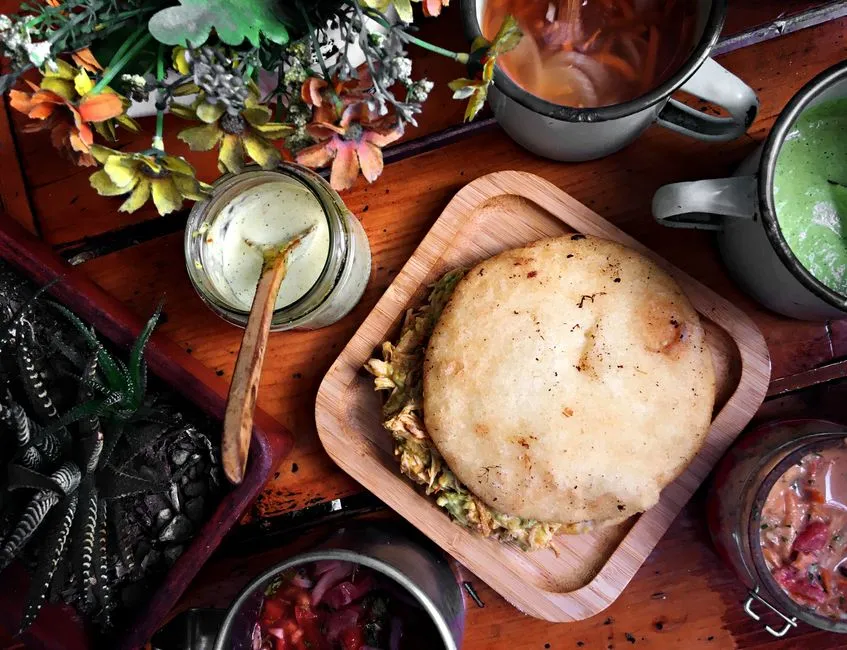
Serve the beans over plain white rice so their broth can spread. Add roast pork for richness, sliced avocado for coolness, pickled onion for acid, or ripe plantain for sweetness. A crisp arepa made with precooked cornmeal is not a traditional substitute for every Cuban plate, but it is an excellent vehicle for leftovers and minds its own business.
If you are exploring rather than cooking, the Miami ventanita guide explains the coffee and snack vocabulary likely to appear at Cuban bakeries and counters. Not every ventanita serves a full plate of beans; a window is a service format, not a menu promise.
Cool and store beans safely
Do not leave a deep stockpot cooling on the counter for the afternoon. Divide the beans into shallow containers and refrigerate within two hours. The USDA’s current leftovers guidance gives cooked leftovers three to four days in the refrigerator. Freeze portions you will not use in that window.
Leave a little cooking liquid with each portion because beans absorb moisture during storage. Thaw in the refrigerator, in cold water, or in the microwave; if using the microwave, continue cooking promptly. Reheat on the stove over medium-low heat with a splash of water, stirring until steaming hot throughout. USDA guidance calls for leftovers to reach 165°F when reheated.
If the beans sat out beyond the safe window, developed mould, fermented unexpectedly, or smell plainly spoiled, discard them. Vinegar is seasoning, not a preservation plan.
One batch teaches the real rhythm: tenderise first, season in layers, add acid late, and stop reducing before the pot turns into masonry. The recipe is patient, not difficult—and the leftovers may be even better at breakfast, where beans are perfectly capable of doing coffee’s emotional work.
Frequently asked questions
Do black beans have to be soaked before cooking?
No, but soaking makes timing more predictable and can shorten the simmer. This recipe uses an eight-to-twelve-hour refrigerator soak, then fresh cooking water. Unsoaked beans need more water and usually more time. Old beans can remain stubborn regardless of the clock, so judge doneness by tasting several beans rather than trusting a single heroic specimen.
Why are my black beans still hard?
They may be old, simmering in acidic liquid too early, or simply undercooked. Keep them covered with hot water and continue at a gentle simmer. Add vinegar only after the beans are tender. Hard water can also slow softening. If beans stay chalky after prolonged cooking, replace the batch; a deadline cannot negotiate with a bean’s birth certificate.
How do I thicken black beans without flour?
Scoop about one cup of tender beans with some liquid, mash them, and stir the mash back into the pot. Simmer uncovered until the liquid coats a spoon, stirring more often as it thickens. The beans’ own starch supplies body. Remember that the pot thickens further while cooling, so stop just before it reaches your ideal leftover texture.
Can I use canned black beans instead?
Yes, but the method changes. Drain and rinse three standard cans, prepare the sofrito, then simmer the beans with roughly two cups of low-sodium broth or water for twenty to thirty minutes. Adjust liquid and salt by taste. Canned beans are already tender, so a long boil can turn them pasty before the aromatics have had a proper introduction.
When should I salt black beans?
Salt can be added during cooking; it does not automatically keep beans hard. For this recipe, adding most salt after the beans begin to soften makes seasoning easier because evaporation and any salted accompaniments vary. Add acidic vinegar near the end, after tenderness is established. Taste the liquid and several beans before adding the final pinch.
How long do cooked black beans keep?
USDA guidance says cooked leftovers can generally be refrigerated for three to four days. Refrigerate the beans within two hours, dividing a large hot batch into shallow containers so it cools quickly. Freeze portions for longer storage and label the date. Reheat leftovers thoroughly; discard beans left out beyond the safe window or showing spoilage rather than relying on a brave sniff.